Newsletters
Welcome to our latest FAMA newsletter
Since our last update, we've hosted a number of events, which has given our members an opportunity to share their work with each other and the local community. They’re part of 15 engagements so far this year, including:
RMA workshops with Irrigation NZ, DairyNZ and Catchment Collective Aotearoa, which included 10 hours of collective work into drafting and revising FAMA’s RMA submission.
In-person and online engagement sessions with a range of guest presenters including soil scientist, Dr Gordon Rajendram.
The ‘Moving the Middle Symposium’ in Wellington, hosted by Landcare Research Group, which was designed to empower New Zealand farmers and rural professionals as they navigate complex landscapes and strive to improve environmental performance. It also provided networking opportunities with other catchment groups from across the country to discuss shared challenges and future opportunities.
If you missed it, our story in Farmers Weekly is well worth a read. It highlights how the fourteen Golden Bay farming families in FAMA have collectively cut their nitrogen losses by 20%, equating to about 90 tonnes less nitrogen entering the system – a fantastic result. With nitrate taking around a decade to travel through the aquifer and monthly testing at the Te Waikoropupū Springs continuing to fluctuate above the WCO limit, the families are asking what that means for them and what more needs to change.
Thank you for your continued support. If you know someone who would find our newsletter interesting, they are welcome to join our mailing list here.
We are also profiling some of the great work by FAMA farmers over the years through case studies on our website. We’d love you to have a read and keep an eye on our website for more coming soon.
Coming up
FAMA and Landcare Trust Field Day: Harwood family farm
Where: Meet at Upper Takaka Country Club before we head to the farm tour (ride sharing encouraged)
Date: Thursday 5 November, 2026
Time: 11am to 1pm
See sustainable dairy farming in action at Nigel Harwood and his family’s Golden Bay farm. Discover the practical improvements they’ve made to reduce nitrogen losses while maintaining productivity, connect with other FAMA farmers, and learn how farmers are working together to protect Te Waikoropupū Springs for future generations. We’ll be visiting Nigel’s leaky weir, wetland construction and plantings.
We’ll also be joined by two special guests:
Michael Edmonson, Agri Environmental and FAMA’s Environmental Consultant who will provide a brief insight into the latest nitrogen reduction figures.
Findal Proebst, Soil Consultant at Agrownomics who will outline the work he’s doing with FAMA on herbage testing and soil analytics.
Light refreshments will be provided.
Farmer spotlight
How Rob and Cherrie Chubb are lifting farm performance while reducing nitrogen losses.
Even with an already efficient system in place, Rob and Cherrie Chubb have continued to reduce nitrogen loss across their Golden Bay farm, while simultaneously increasing milk production. Over the past 24 years, they have developed a simple pasture-based system built on steady, practical improvement by breeding efficient cows and maximising pasture use through careful grazing management.
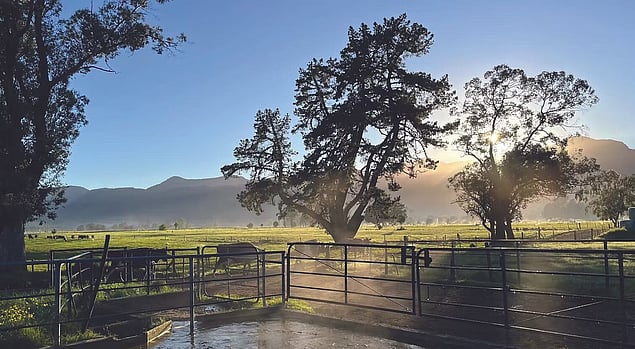
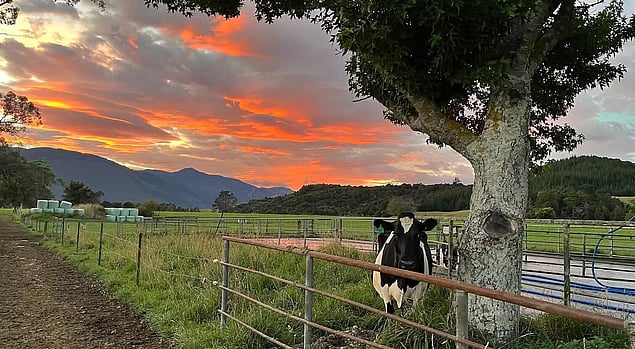
They milk a 142 crossbred herd on a 52.9 hectare irrigated dairy platform, supported by a nearby 34 hectare block used for young stock grazing, wintering, and supplementary feed production.
In the season ending May 2025, the herd produced an impressive 482kg of milksolids per cow, while consuming just 326kg of supplement per cow.
Alongside their achievements in milk production, the Chubbs have made targeted changes to reduce nitrogen losses and improve environmental outcomes across the farm. Despite already operating at a relatively low nitrogen loss of 66 kg N/ha in the monitored baseline year (2017), they have since reduced this by a further 8% to 61 kg N/ha.
“We have always tried to maintain a simple system and do it well. Being part of FAMA provides us with new insights and continues to help us identify refinements to help us keep driving efficiencies.” – Cherrie Chubb, Chubb Farm
Read our previous newsletters